
Hemoglobin
Structure, Function, and Dysfunction

Disclaimer: This article is for information only. It is not intended to diagnose or treat any diseases.
Intro
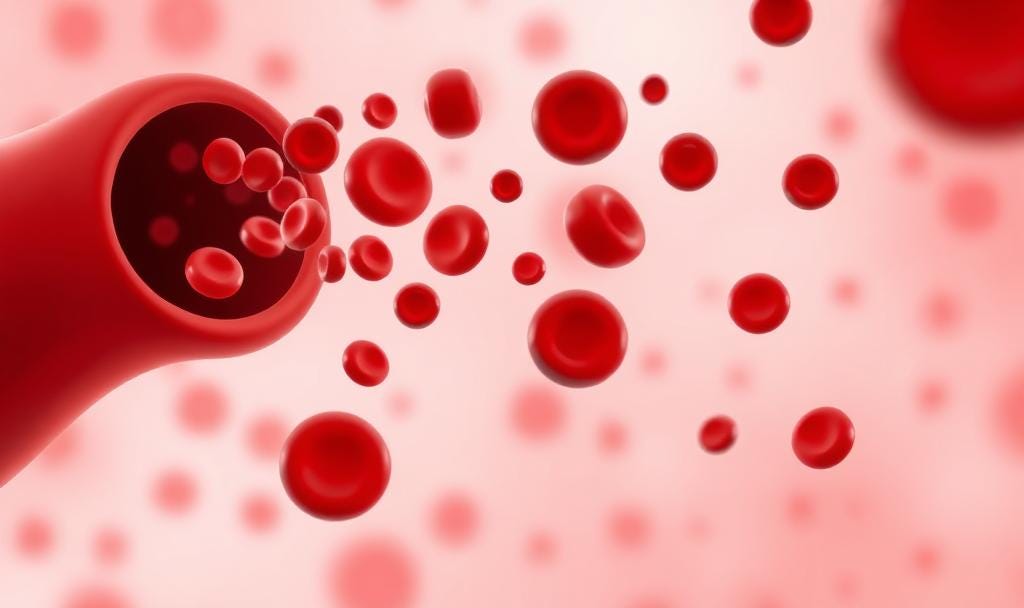
Hemoglobin is the primary transporter of oxygen in the blood, with iron bound to the core of the heme porphyrin ring giving red blood cells their iconic color. Hemoglobin consists of the heme porphyrin ring and the globin protein. In this article, we will explore the structure, function, and abnormalities of the hemoglobin molecule, highlighting key findings that distinguish each hemoglobin abnormality.
All about heme
Let us begin with the heme molecule. Heme is produced in the liver and in erythroid progenitor cells within the mitochondria. Heme is a porphyrin ring with a strong affinity to bind (chelate) with iron. Heme Is a vital component to many molecules within the body such as myoglobin, respiratory cytochrome, and cytochrome p450. The majority of heme is dedicated to forming hemoglobin. Heme’s affinity to chelate iron gives hemoglobin the ability to transport oxygen by oxidizing the iron core. (1)
Heme synthesis comprises eight steps mediated by several enzymes. It begins with the combination of glycine and succinyl CoA. The next seven steps result in various porphyrins and terminate at heme production. The heme molecule is secreted into the cytoplasm where it chelates iron. The increased presence of heme in liver cells provides negative feedback on its production. Erythroid precursor cells are conditioned to allow for substantially more heme molecules to be produced. This is essential to providing adequate amounts of building blocks for hemoglobin production. (1)
The special protein: Globin
Globins are proteins transcribed from genes on chromosomes 11 and 16. In erythroid precursor cells, the presence of heme in the cytoplasm promotes globin synthesis. Four globin subunits are used to form hemoglobin at various stages of human development. These include alpha (α), beta (β), gamma (γ), and delta (δ) globin proteins. (2)
The making of hemoglobin
Hemoglobin synthesis occurs in the cytoplasm when four heme molecules and four globin subunits combine. More specifically, each globin chain contorts around a heme molecule and four of these bundles come together to form hemoglobin. There are three types of normal hemoglobin molecules found within the body at various stages of development. Each type of hemoglobin derives its name from the globin subunits.
Starting in the first trimester, the dominant hemoglobin is called fetal hemoglobin. (2) It’s produced within the yolk sac and eventually by the fetal liver, spleen, and bone marrow. (3) Fetal hemoglobin consists of two α and two γ globin subunits. Fetal hemoglobin quickly decreases after birth and is replaced by the adult hemoglobin called hemoglobin A. Hemoglobin A is composed of two α and two β globin subunits. In a healthy human being, hemoglobin A makes up 95 to 98% of hemoglobin within the body. There is also a secondary hemoglobin called hemoglobin A2 which is made of two α and two δ globin chains. Hemoglobin A2 concentration is around 5 to 2% of adult hemoglobin. (2)
Inherited hemoglobin disorders
Mutations, deletions, and substitutions affecting the globin gene segments are inheritable causes of qualitative and quantitative hemoglobin disorders. The first type, thalassemia, is caused by a deletion or point mutation of the gene segments coding for the globin subunit. The result of an underproduction or zero production of the affected globin subunit. The severity of disease reflects the pattern of inheritance, either heterozygous or homozygous.
Alpha thalassemia is the result of the deletions within the α-globin gene segment. 4 alleles contain the blueprint for α-globin construction. Disease severity is directly related to the number of alleles that are deleted. For instance, the mild form of α-thalassemia called α-thalassemia minor is lacking one allele. Each allele deleted increases disease severity because of a decrease in α-globin subunit production. The most severe expression of the disease, total deletion of the gene segment, is incompatible with life and results in fetal hydrops. (4)
Beta thalassemia is the result of a point mutation within the beta-globin gene segment. Inheritance patterns dictate the severity of β-thalassemia. Heterozygous inheritance produces asymptomatic to mild symptoms due to a small decrease in β-globin subunit production. It is known as β-thalassemia minor. Homozygous inheritance results in β-thalassemia major which is a total absence of β-globin production. People with β-thalassemia major suffer severe anemia, jaundice, slow growth, hepatosplenomegaly, and endocrine dysfunction. Both α and β-thalassemia can be coinherited or inherited with a qualitative hemoglobin variant. (4)
Qualitative hemoglobin variants result from amino acid substitutions within the β-globin gene segment.. There are three commonly encountered hemoglobin variants. They are hemoglobin S, C and E. It should be noted that hemoglobin S is the most common, while hemoglobin C and E tend to have a much lower frequency. Similar to thalassemia, the disease severity is directly related to inheritance pattern.
Hemoglobin S, sickle cell, is the most prevalent and well-known hemoglobin variant. Hemoglobin S results from the substitution of valine for glutamic acid in the sixth position within the β-globin subunit. In the homozygous inheritance, hemoglobin S is exclusively produced instead of hemoglobin A. Hemoglobin S prefers to polymerize which distorts the red blood cells into the iconic sickle shape. The deformed red blood cells get lodged in capillaries causing pain, and organ infarction. Heterozygous inheritance, sickle cell trait, is asymptomatic or mild. Anemia and sickle crises can still occur if the person is placed under extreme hypoxic stress. (5)
Hemoglobin C is another hemoglobin variant with the propensity to form crystals. Hemoglobin C is caused by the substitution of lysine for glutamic acid in the sixth position of the β-globin subunit. Zygosity also dictates the severity of the disease from asymptomatic heterozygotes to severe hemolytic anemia in homozygotes. The crystals produced by the polymerization of hemoglobin C are sometimes observed ion peripheral smear and resemble a prism bar. (6)
Hemoglobin E is the final most commonly encountered hemoglobin variant, although at a much lower frequency. It is caused by the substitution of lysine for glutamic acid at the twenty-sixth position of the β-globin. The hemoglobin E variant causes structurally abnormal hemoglobin and an overall decrease in hemoglobin production. (7)
Acquired hemoglobin disorders
Hemoglobin dysfunction isn’t always inherited. Occasionally, the hemoglobin of an otherwise healthy person can be altered. This can happen when the person is exposed to toxins in the environment. Carboxyhemoglobin occurs when carbon monoxide binds with hemoglobin instead of oxygen. The bonds formed with carbon monoxide out compete oxygen essentially suffocating body tissues. Methemoglobin is the result of the oxidation of iron to the ferric state when the body is thrown into an alkaline state. The heme molecules are changed to hematin which will irreversibly bind with oxygen. This typically occurs in the presence of toxic agents such as nitrates, aniline dyes, chlorates, quinones, phenacetin, procaine, benzocaine, and lidocaine. Methemoglobin can be reversed if reduced by the NADH cytochrome reductase system. The last instance of conversion of normal hemoglobin is sulfhemoglobin. This is an irreversible reaction of adding sulfur to the porphyrin rings of heme. This can occur when a person ingests sulfur-containing substances. Sulfhemoglobin is unable to transport oxygen. (1)
Conclusion
The hemoglobin molecule plays a vital role in oxygen transport within the blood. Its structure and function are uniquely designed to accomplish this ability. Understanding the various abnormalities, from thalassemias to hemoglobin variants, highlights the intricacies of genetic and acquired conditions affecting hemoglobin. Through continued research and education, we can better diagnose, treat, and manage these hemoglobin disorders, improving patient outcomes.
Riddle answers:
1. Hemoglobin
2. Methemoglobin
3. Carboxyhemoglobin
References:
1. Sunheimer RL, Graves L. Clinical laboratory chemistry.; 2010. http://ci.nii.ac.jp/ncid/BB0638763X
2. Farid Y, Bowman NS, Lecat P. Biochemistry, Hemoglobin Synthesis. [Updated 2023 May 1]. In: StatPearls [Internet]. Treasure Island (FL): StatPearls Publishing; 2025 Jan-. Available from: https://www.ncbi.nlm.nih.gov/books/NBK536912/
3. Sankaran VG, Orkin SH. The Switch from Fetal to Adult Hemoglobin. Cold Spring Harbor Perspectives in Medicine. 2012;3(1):a011643. doi:10.1101/cshperspect.a011643
4. Bajwa H, Basit H. Thalassemia. [Updated 2023 Aug 8]. In: StatPearls [Internet]. Treasure Island (FL): StatPearls Publishing; 2025 Jan-. Available from: https://www.ncbi.nlm.nih.gov/books/NBK545151/
5. Washington State Department of Health Newborn Screening Program. Health Care Provider Hemoglobinopathy Fact Sheet.; 2011. https://doh.wa.gov/sites/default/files/legacy/Documents/5220/HbSFactSheet.pdf
6. Karna B, Jha SK, Al Zaabi E. Hemoglobin C Disease. [Updated 2023 May 29]. In: StatPearls [Internet]. Treasure Island (FL): StatPearls Publishing; 2025 Jan-. Available from: https://www.ncbi.nlm.nih.gov/books/NBK559043/
7. Washington State Department of Health Newborn Screening Program. Health Care Provider Hemoglobinopathy Fact Sheet.; 2011. https://doh.wa.gov/sites/default/files/legacy/Documents/5220/HbEFactSheet.pdf